

Skip to content
News Releases
March 26, 2024
"The transition to becoming a Techco demands a fundamental overhaul of corporate culture, embracing an agile mindset that champions digitalization and AI as core components."
Mark-R-members-headshots
Markus Reber
Executive Vice President of Networks at Swisscom

Navigating the Transition: Telecom Operators' Journey to Techcos
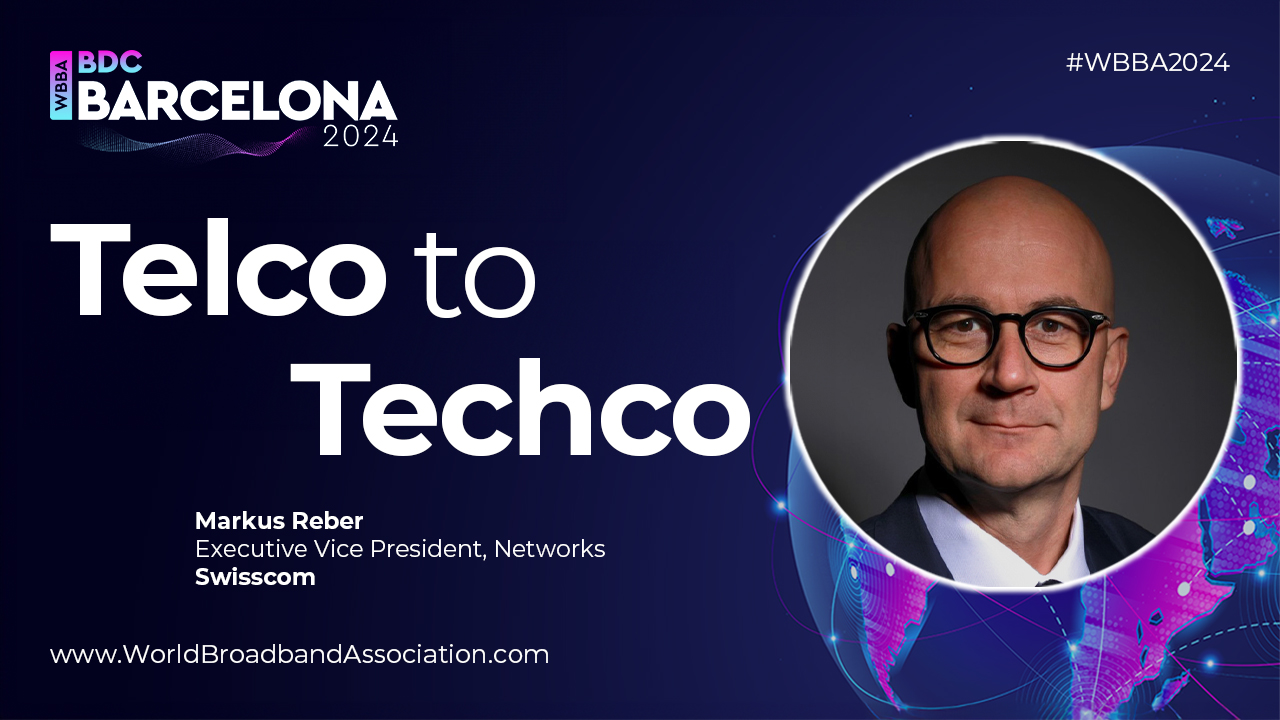
KV

Insights from Swisscom's EVP: Navigating Telecom's Shift to Techcos

By Markus Reber - Executive Vice President of Networks at Swisscom

As Executive Vice President of Networks at Swisscom I've witnessed firsthand the monumental shift traditional telecom operators are undergoing as they strive to become "Techcos" in today's dynamic landscape. This transformation is not without its challenges, presenting a series of hurdles that operators must navigate adeptly to thrive in the digital age.

One of the most formidable challenges lies in the fierce competition posed by global "Big Tech" firms such as Alphabet, Amazon, Apple, Meta Platforms, and Microsoft. This juxtaposition often feels like a David versus Goliath scenario, with traditional operators grappling to assert their relevance amidst tech giants wielding vast resources and influence.

Moreover, the transition to becoming a Techco demands a fundamental overhaul of corporate culture. Moving away from traditional hierarchical structures to embrace an agile mindset that champions digitalization and AI as core components is imperative. This cultural shift is essential for fostering innovation, adaptability, and responsiveness to the evolving needs of customers in an increasingly digital world.

Another critical aspect of this transformation involves breaking away from legacy processes and business models centered around access fees. Instead, operators must pivot towards models driven by value-added services that are easily scalable and capable of generating higher revenue streams. This shift requires strategic foresight and a willingness to embrace change to remain competitive in a rapidly evolving market.

Furthermore, securing revenue from established services is crucial for funding investment in innovative ventures and "moonshot" projects. This necessitates a delicate balance between maintaining existing revenue streams while simultaneously exploring new avenues for growth and innovation.

"The war for talent intensifies the transition for telecom operators, facing stiff competition from Big Tech companies for Swiss and international talents, adding complexity to the talent acquisition process."

Additionally, the war for talent and brain competition further complicates the transition for telecom operators. With Big Tech companies setting up headquarters in strategic locations like Zurich and Switzerland, operators like Swisscom face stiff competition in recruiting the best Swiss talents. Moreover, the geographical limitations to Switzerland intensify the competition for international talents, adding another layer of complexity to the talent acquisition process.

In conclusion, the journey towards becoming a Techco is fraught with challenges, but it also presents immense opportunities for traditional telecom operators to redefine their roles and solidify their relevance in the digital era. By navigating these challenges with agility, innovation, and strategic foresight, operators can position themselves as formidable players in the tech landscape of tomorrow.

Sign Up to Receive News Updates

Key Messages

Advanced cloud technology together with superior end-to-end connectivity can enable a wider and more sophisticated range of applications that can in turn drive greater innovation, efficiency, and wealth.
Both enterprises and broader industry ecosystems are actively looking at broadband’s role in enabling their digital transformation. Most respondents to the WBBA’s Thought Leadership Enterprise Survey stated that they need faster and more reliable internet to run their business applications.
Certainly, in the short to medium term, xDSL, cable modem, fixed-wireless access (FWA), and satellite are all expected to have a role in the delivery of broadband services. However, full-fiber access will always deliver the optimum experience and remains the most sustainable and cost-efficient option.
There is a danger therefore for governments to base their cost-benefit analysis on a national economic view. However, such analysis will miss all the social benefits, as well as the more local economic benefits, that advanced broadband networks can bring. Governments must take all benefits into account, including more localized ones, when creating national broadband policies.
However, future applications will not only need ultra-high-speed services but also ultra-low latency and jitter, with high levels of reliability and consistency if they are to function properly. Countries with networks that are not capable of meeting such criteria will be left behind as the world moves to the next phase of internet applications such as the “metaverse.”
Fiber networks are significantly more environmentally friendly than equivalent copper-based networks, and can help support other green initiatives such as greater working from home, the use of advanced videoconferencing, etc. Fiber-based networks also require less maintenance due to there being less active equipment in the field, and can therefore reduce operators’ operational costs.
With rollout of new access technologies like 5G and Fiber, IPv6 reached more than 30% penetration worldwide (APNIC) and is rapidly growing. IPv6 Enhanced technologies, including segment routing over IPv6, per flow monitoring and AI, enable a multitude of objects and people to be flexibly connected to the proper services, granting end-to-end quality of experience.
Based on the responses from the WBBA Thought Leadership Survey, respondents believed, on average, this coverage could be expanded to approximately 70% through private investment. It is clear that government support will be needed to get to 100%.
However, a lack of data on the available infrastructure, access to key infrastructure such as ducts and in-building networks, and a lack of understanding both internally and externally are also key barriers to further investment.
Respondents to the WBBA survey stated that a reduction in regulatory barriers, greater flexibility in partnership arrangements, copper switch-off regulations, and setting out minimum service standards for network installations, would all take priority over financial support.

Recommendations

All countries must look to maximize the potential of broadband. This means creating long-term national broadband plans that evolve around three basic phases of broadband adoption:

In order to help facilitate this evolution to advanced broadband networks, government organizations and regulators must consider:

Making the Recommendations a Reality

Operators, enterprises, vendors, regulators, and policy-makers should seek to create a collective voice, to evangelize, advocate, co-create, and partner in the drive toward the provision of ultra-broadband networks and services for all. Organizations such as the WBBA can help by influencing key stakeholders through discussion, education, and promotion. Specifically, the WBBA should aim to: