
Skip to content
News Releases
April 18, 2024

Strengthening Global Connectivity: WBBA and ITU Forge Collaborative Partnership
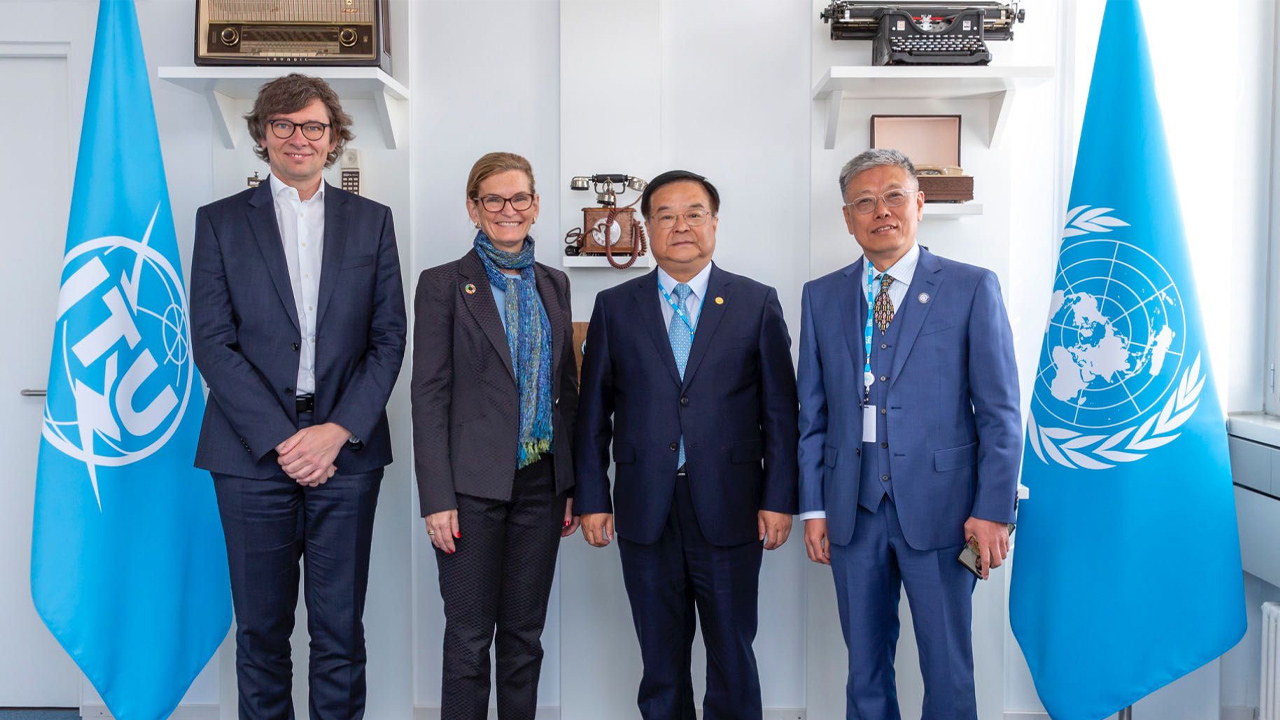
Image (2)

World Broadband Association and ITU Join Forces to Bridge Digital Divide

On April 16th, 2024, Li Zhengmao, the Chairman of the WBBA Board, visited the headquarters of the International Telecommunication Union (ITU) and met with Secretary-General Doreen Bogdan-Martin. This strategic meeting marked a significant milestone in the ongoing efforts to bridge the global digital divide and drive sustainable development.

During the meeting, Li Zhengmao provided an overview of WBBA's establishment, its remarkable progress over the past year, and the association's ambitious goals for the future. He emphasized WBBA's unwavering commitment to bridging the global digital divide and contributing to the achievement of the United Nations Sustainable Development Goals (SDGs) by 2030.

Doreen Bogdan-Martin, the ITU Secretary-General, expressed her enthusiasm for the alignment between WBBA's objectives and the Partner2Connect digital alliance commitment initiated by ITU. She highlighted the potential for close collaboration between the two organizations, focusing on increasing investment and construction of broadband infrastructure in underserved regions and working together to promote green and sustainable development.

To further strengthen the partnership, Li Zhengmao proposed three key suggestions:

  1. Inviting WBBA to join ITU as a member, enabling the association to play a significant role in the global digital landscape.
  2. Seeking advice and support from ITU on WBBA's development, fostering a mutually beneficial relationship.
  3. Extending a cordial invitation to the ITU Secretary-General to attend the upcoming WBBA Shanghai Summit.

Doreen Bogdan-Martin welcomed these proposals, recognizing the immense value that WBBA's expertise and network can bring to the table. She expressed her eagerness to collaborate closely with WBBA in the future, leveraging their combined resources and expertise to drive transformative change.

This strategic meeting between WBBA and ITU laid a solid foundation for future cooperative development between the two parties. By aligning their visions and leveraging their respective strengths, WBBA and ITU are poised to make significant strides in bridging the global digital divide, promoting green and sustainable development, and building a more inclusive and prosperous digital future for all.

Discover the benefits of WBBA membership and inquire about joining today by clicking HERE.

Sign Up to Receive News Updates

Key Messages

Advanced cloud technology together with superior end-to-end connectivity can enable a wider and more sophisticated range of applications that can in turn drive greater innovation, efficiency, and wealth.
Both enterprises and broader industry ecosystems are actively looking at broadband’s role in enabling their digital transformation. Most respondents to the WBBA’s Thought Leadership Enterprise Survey stated that they need faster and more reliable internet to run their business applications.
Certainly, in the short to medium term, xDSL, cable modem, fixed-wireless access (FWA), and satellite are all expected to have a role in the delivery of broadband services. However, full-fiber access will always deliver the optimum experience and remains the most sustainable and cost-efficient option.
There is a danger therefore for governments to base their cost-benefit analysis on a national economic view. However, such analysis will miss all the social benefits, as well as the more local economic benefits, that advanced broadband networks can bring. Governments must take all benefits into account, including more localized ones, when creating national broadband policies.
However, future applications will not only need ultra-high-speed services but also ultra-low latency and jitter, with high levels of reliability and consistency if they are to function properly. Countries with networks that are not capable of meeting such criteria will be left behind as the world moves to the next phase of internet applications such as the “metaverse.”
Fiber networks are significantly more environmentally friendly than equivalent copper-based networks, and can help support other green initiatives such as greater working from home, the use of advanced videoconferencing, etc. Fiber-based networks also require less maintenance due to there being less active equipment in the field, and can therefore reduce operators’ operational costs.
With rollout of new access technologies like 5G and Fiber, IPv6 reached more than 30% penetration worldwide (APNIC) and is rapidly growing. IPv6 Enhanced technologies, including segment routing over IPv6, per flow monitoring and AI, enable a multitude of objects and people to be flexibly connected to the proper services, granting end-to-end quality of experience.
Based on the responses from the WBBA Thought Leadership Survey, respondents believed, on average, this coverage could be expanded to approximately 70% through private investment. It is clear that government support will be needed to get to 100%.
However, a lack of data on the available infrastructure, access to key infrastructure such as ducts and in-building networks, and a lack of understanding both internally and externally are also key barriers to further investment.
Respondents to the WBBA survey stated that a reduction in regulatory barriers, greater flexibility in partnership arrangements, copper switch-off regulations, and setting out minimum service standards for network installations, would all take priority over financial support.

Recommendations

All countries must look to maximize the potential of broadband. This means creating long-term national broadband plans that evolve around three basic phases of broadband adoption:

In order to help facilitate this evolution to advanced broadband networks, government organizations and regulators must consider:

Making the Recommendations a Reality

Operators, enterprises, vendors, regulators, and policy-makers should seek to create a collective voice, to evangelize, advocate, co-create, and partner in the drive toward the provision of ultra-broadband networks and services for all. Organizations such as the WBBA can help by influencing key stakeholders through discussion, education, and promotion. Specifically, the WBBA should aim to: