

2024 Broadband Development Congress whitepaper launch highlights AI’s role in sustainable fixed networks
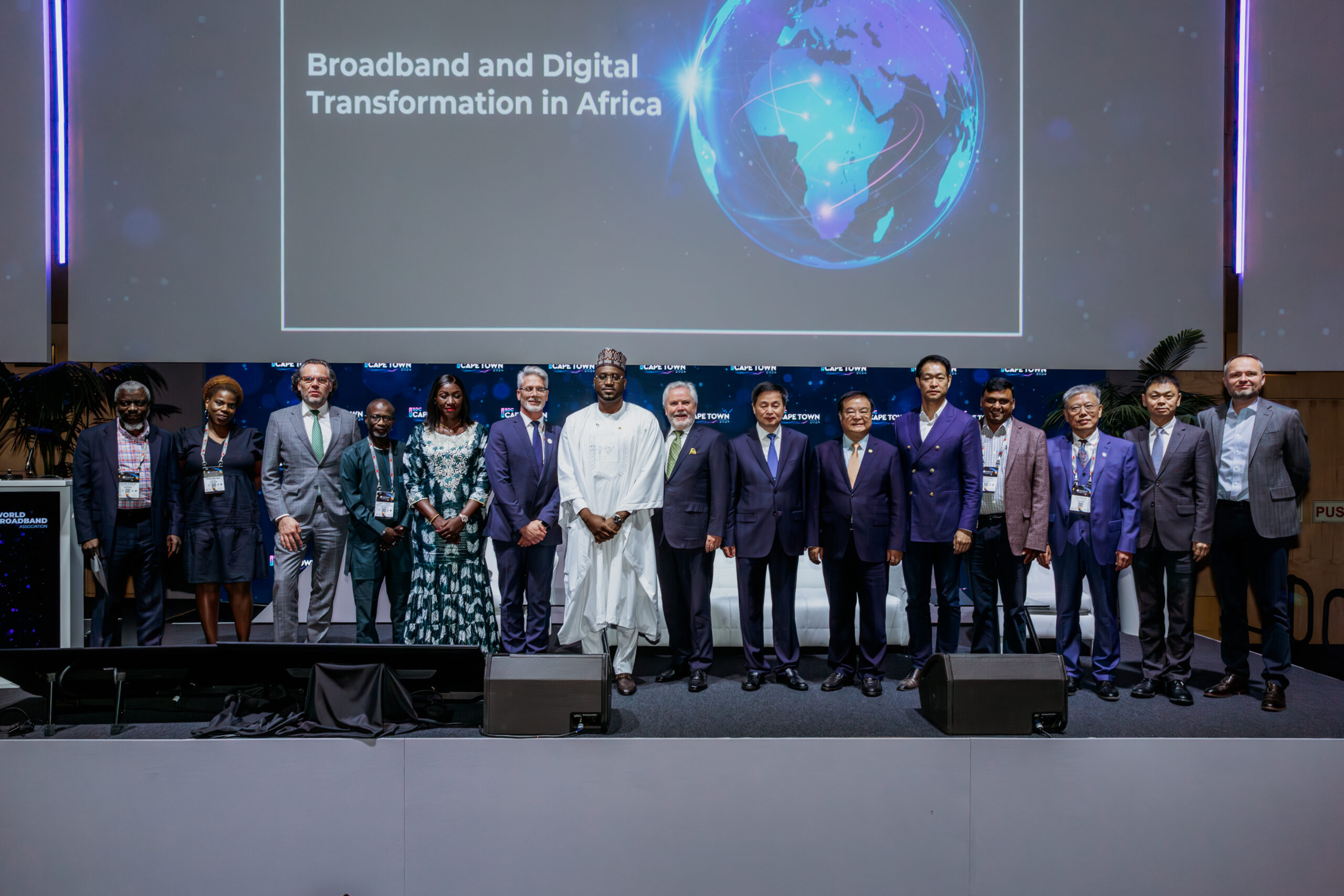
Cape Town, 29th November: The 2024 Broadband Development Congress: Cape Town, hosted by the World Broadband Association (WBBA) during Africa Tech Festival 2024, brought together global industry leaders and stakeholders from the operator, technology, ministerial, and banking sectors to address the critical challenges and opportunities in expanding broadband access across Africa.
In addition to showcasing broadband adoption success stories, a highlight was the launch of a whitepaper, The Role of AI in Fixed Networks Sustainability. This informative document explores how AI-enabled solutions improve operational efficiencies, reduce energy consumption, and lower carbon emissions while supporting sustainable and resilient fixed broadband infrastructure.
With broadband subscriptions up by 22% in the past year, and broadband service revenues forecast to grow 45% to $6.7 billion in 2029, the conference emphasised the importance of partnerships and innovation.
Collaborative solutions to Africa’s broadband challenges
With over 130 global members and a growing African membership, the WBBA is a multilateral, industry-led association providing leadership for digital broadband innovation. The organisation’s objective is to overcome industry challenges and support the drive toward the provision of broadband networks and services for all. The 2024 Broadband Development Congress: Cape Town provided the perfect platform to achieve these goals.
Key discussions and expert insights
Delivering the event’s opening address, Dr. Li Zhengmao, Chairman of the World Broadband Association, discussed broadband’s transformative role in Africa’s digital landscape, highlighting the continent’s rich resources and bright digital future. Nfaly Sylla, Chief of Staff at Guinea’s Ministry of Posts, Telecommunications and Digital Economy, reinforced this message, showcasing initiatives like the National Data Centre and its role in digital growth.
Ke Ruiwen, Executive Director, Chairman, and CEO of China Telecom, outlined the evolution of telecom companies into ‘techcos’ and Africa-focused investment strategies. Reflecting on the whitepaper theme, Norbert Prihoda, Deputy CEO of Tunisie Telecom, emphasised AI’s impact on broadband deployment.
Dr. Sunil Piyarlall, Network Architecture and Modelling Executive at Openserve, called for equitable digital infrastructure access, and Pieter Viljoen, CEO of Yangtze Optics Africa Cable, explored scalable fibre production models for Africa.
A dynamic panel addressed critical themes like investments, regulatory frameworks, and financing models, with experts from Omdia, Gambia Telecom, Africa Cyber Defense Forum, MTN, Standard Bank, and ZTE Corporation discussing practical steps to accelerate broadband deployment.
Tebogo Moloi, Head of Cloud Engineering at Standard Bank Group, highlighted the role of digital infrastructure in supporting banking services and enhancing customer experiences across Africa. Kim Jin, Vice President and CMO of Huawei’s Optical Business Product Line, presented on the company's initiatives to support broadband expansion in Africa, suggesting African carriers consider monetisation models to drive digital economy and revenue growth.
In the closing address, WBBA Director General Martin Creaner discussed the concept of smart sustainability and how AI is transforming broadband through smarter network planning, optimisation, and management. He elaborated on the key themes of The Role of AI in Fixed Networks Sustainability whitepaper, reiterating that the biggest challenge identified – ensuring data availability and quality – is a call to action for operators aiming to maximise AI’s benefits.
Get the whitepaper The whitepaper, The Role of AI in Fixed Networks Sustainability, is now available for download on the WBBA website. It provides essential guidance for industry leaders navigating the path toward a sustainable, digitally connected Africa.