

Skip to content
News Releases
March 5, 2025

AI and Net5.5G pivotal to achieving next-generation broadband networks says WBBA
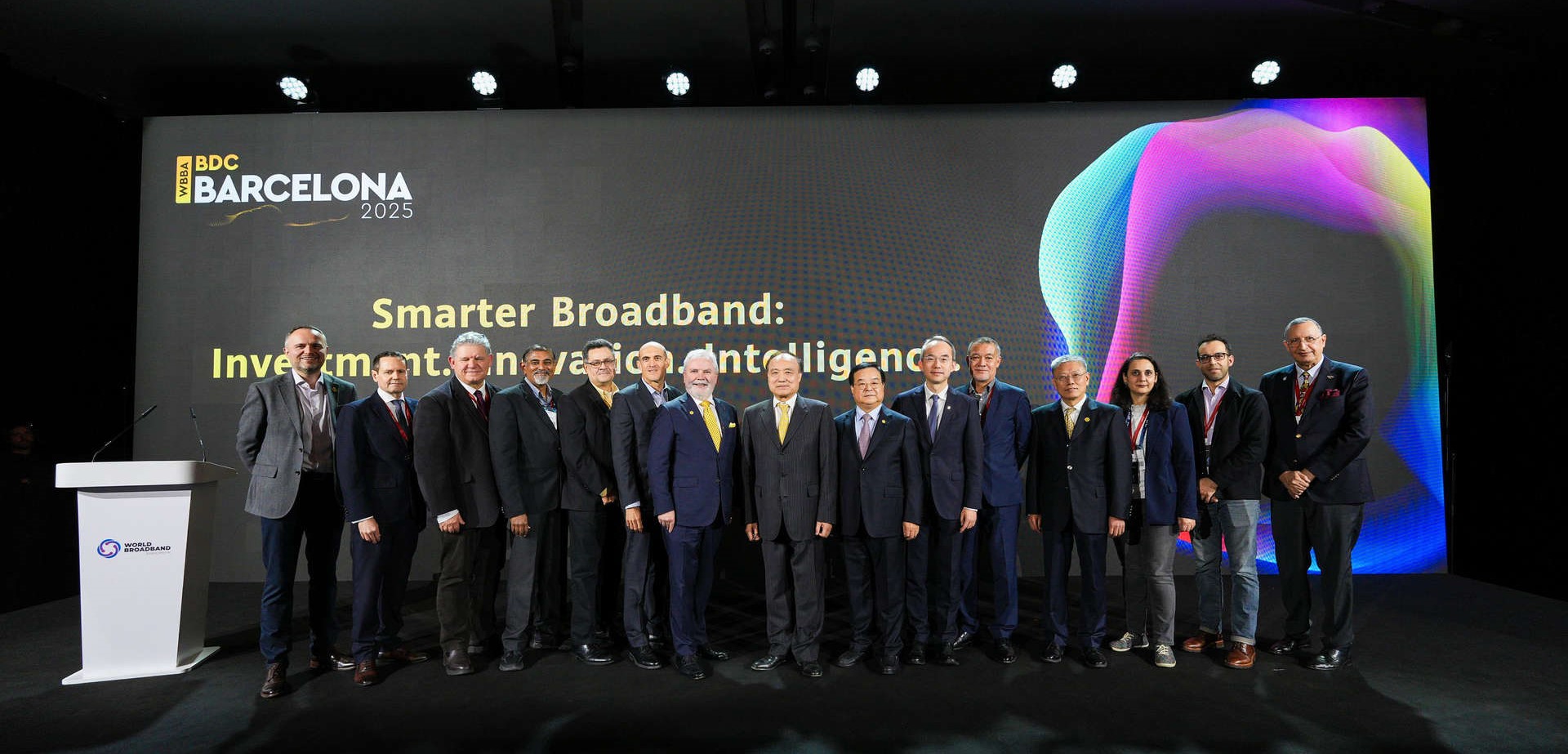
MWC thumbnail

Artificial Intelligence (AI) can improve broadband infrastructure investment and contribute to enhanced profits and time-to-market so long as it’s used correctly in the pre-deployment phases of broadband rollout, the World Broadband Association (WBBA) has announced today.


In one of four whitepapers launched at the WBBA Broadband Development Congress (BDC) Barcelona, the WBBA outlined the current and potential uses of AI during the pre-deployment phases of broadband networks, and how this can assist in network planning and expansion decisions. As a result, operators can ensure infrastructure is rolled out at the right locations, using the right technologies, and within optimised Return on Investment (ROI) scenarios.


“The pre-deployment phases in broadband are periods of decision-making and network planning before infrastructure is rolled out or upgraded,” said Director General of the WBBA, Martin Creaner. “It’s an ideal environment for AI to make an impact, and if its models are supported by the right data and algorithms, then it can be used to help operators predict the return on their investments much more accurately.”


Another key announcement from the WBBA is the ‘Gigacity Index 2025’, which ranks cities from 30 countries across the globe in terms of their broadband sophistication. With gigabit broadband services pivotal to delivering next-generation internet services, and establishing a premium business environment, the first issue of the Index assesses cities such as Singapore, Shanghai, New York, Madrid and Zurich, ranking their broadband capabilities and highlighting and the policies, investments and advancements that had led them to become Gigacities. Metrics considered in the Gigacities Index include a city’s network infrastructure, including FTTH coverage and 10G PON availability, network connectivity and broadband experience.


Net5.5G was also a key consideration of the WBBA at BDC Barcelona. Having defined Net5.5G architecture in the ‘Network Evolution for the 5.5G and 6G Era’ whitepaper in June 2024, the WBBA has now published use cases from across five continents which demonstrate successful Net5.5G scenarios and functionalities from operators, carriers and other key industry players.


This collection of use cases demonstrates how the Net5.5G architecture is already being deployed by many operators and stakeholders all over the world, and reflects the sustainable evolution of data communication networks (DCNs) in an era when 5.5G and ubiquitous AI computing will become commonplace.


“Our Network Technology working group (WG4) continues to lead the way where Net5.5G is concerned,” continued Creaner. “Not only is this team sharing vision, roles and requirements for Net5.5G, but are also developing an end-to-end blueprint for network evolution for the 5G Advanced and 6G era. We are excited by the potential of Net5.5G to help realise the promise of digital transformation in a fully connected intelligent world.”


Attendees at BDC Barcelona also saw the GSMA 5G Voice over Wi-Fi Task Force (which includes GSMA, WBBA, Wireless Broadband Alliance and others) present a new report on VoWiFi – more commonly known as Wi-Fi Calling – which has been deployed by numerous operators worldwide in the last decade. Effectively integrating wireless and wired networks to realise seamless indoor and outdoor coverage, the concept is designed to provide users with ubiquitous, high-quality voice services.


The report considers the reasons why Wi-Fi Calling is needed for a variety of scenarios and services, providing use cases across a number of sectors and potential business models. The task force also consider the new requirements emerging for Wi-Fi Calling in the 5G era, and the gaps which need to be addressed in order to facilitate further deployment and usage of the concept.


All whitepapers released during BDC Barcelona can be found on the WBBA website.
Sign Up to Receive News Updates

    Have a question about membership, working groups, or WBBA more broadly? We’d love to hear from you. 

    Email us at [email protected] and we’ll get back to you shortly.

Membership Enquiries

[gravityform id="3" title="false"]

Testing New Form

Key Messages

Advanced cloud technology together with superior end-to-end connectivity can enable a wider and more sophisticated range of applications that can in turn drive greater innovation, efficiency, and wealth.
Both enterprises and broader industry ecosystems are actively looking at broadband’s role in enabling their digital transformation. Most respondents to the WBBA’s Thought Leadership Enterprise Survey stated that they need faster and more reliable internet to run their business applications.
Certainly, in the short to medium term, xDSL, cable modem, fixed-wireless access (FWA), and satellite are all expected to have a role in the delivery of broadband services. However, full-fiber access will always deliver the optimum experience and remains the most sustainable and cost-efficient option.
There is a danger therefore for governments to base their cost-benefit analysis on a national economic view. However, such analysis will miss all the social benefits, as well as the more local economic benefits, that advanced broadband networks can bring. Governments must take all benefits into account, including more localized ones, when creating national broadband policies.
However, future applications will not only need ultra-high-speed services but also ultra-low latency and jitter, with high levels of reliability and consistency if they are to function properly. Countries with networks that are not capable of meeting such criteria will be left behind as the world moves to the next phase of internet applications such as the “metaverse.”
Fiber networks are significantly more environmentally friendly than equivalent copper-based networks, and can help support other green initiatives such as greater working from home, the use of advanced videoconferencing, etc. Fiber-based networks also require less maintenance due to there being less active equipment in the field, and can therefore reduce operators’ operational costs.
With rollout of new access technologies like 5G and Fiber, IPv6 reached more than 30% penetration worldwide (APNIC) and is rapidly growing. IPv6 Enhanced technologies, including segment routing over IPv6, per flow monitoring and AI, enable a multitude of objects and people to be flexibly connected to the proper services, granting end-to-end quality of experience.
Based on the responses from the WBBA Thought Leadership Survey, respondents believed, on average, this coverage could be expanded to approximately 70% through private investment. It is clear that government support will be needed to get to 100%.
However, a lack of data on the available infrastructure, access to key infrastructure such as ducts and in-building networks, and a lack of understanding both internally and externally are also key barriers to further investment.
Respondents to the WBBA survey stated that a reduction in regulatory barriers, greater flexibility in partnership arrangements, copper switch-off regulations, and setting out minimum service standards for network installations, would all take priority over financial support.

Recommendations

All countries must look to maximize the potential of broadband. This means creating long-term national broadband plans that evolve around three basic phases of broadband adoption:

In order to help facilitate this evolution to advanced broadband networks, government organizations and regulators must consider:

Making the Recommendations a Reality

Operators, enterprises, vendors, regulators, and policy-makers should seek to create a collective voice, to evangelize, advocate, co-create, and partner in the drive toward the provision of ultra-broadband networks and services for all. Organizations such as the WBBA can help by influencing key stakeholders through discussion, education, and promotion. Specifically, the WBBA should aim to: